
Grand Teton & Yellowstone
Two parks, one long stretch of wild country
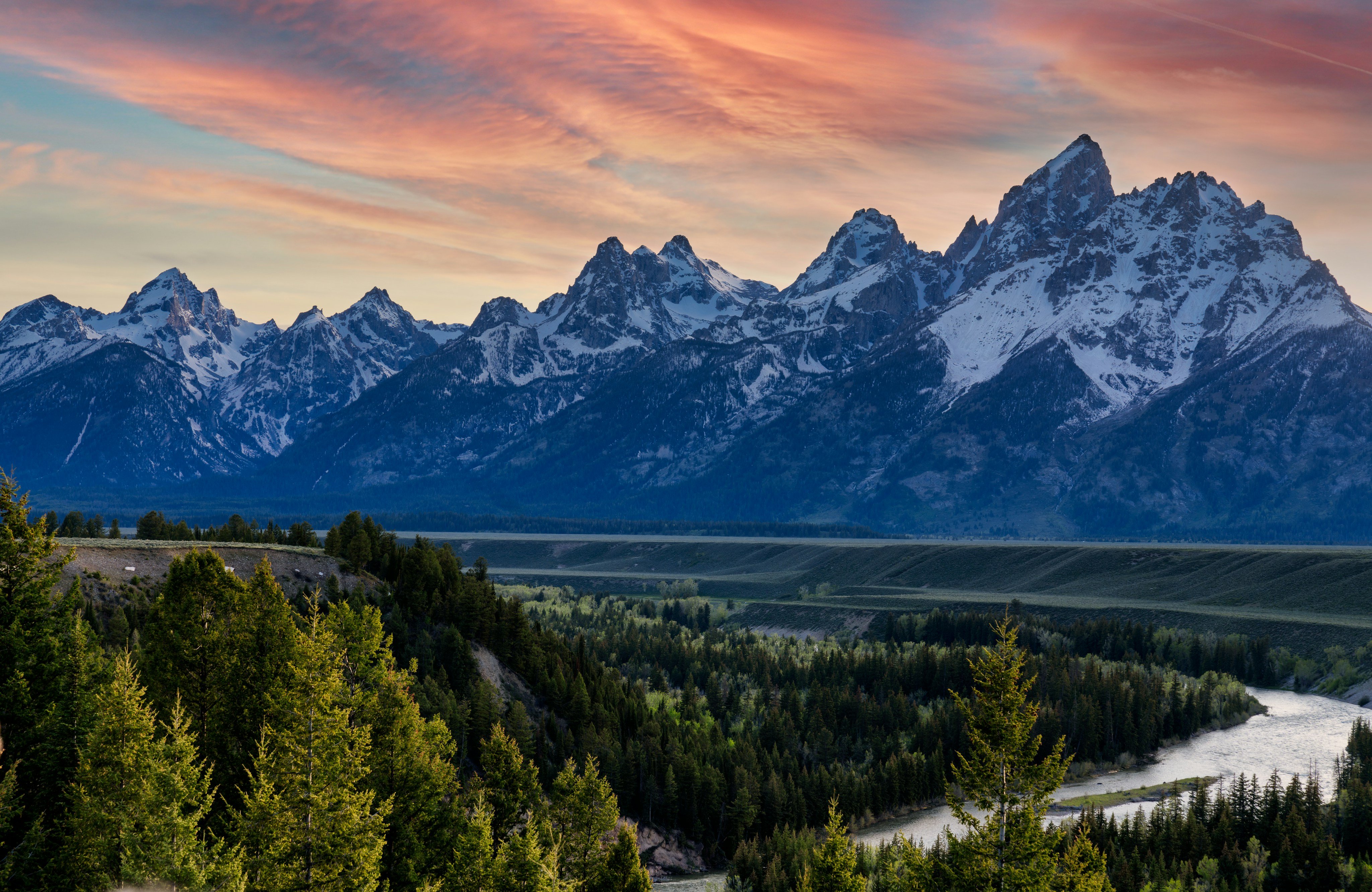
Granite peaks to the south, steaming basins to the north, and a lot of animals in between. All of it within reach of Teton Valley.
The Greater Yellowstone
Some of the last intact wilderness in the lower 48
Grand Teton and Yellowstone sit back to back, joined by the John D. Rockefeller Jr. Memorial Parkway. Together they protect close to 2.5 million acres, and nearly every large mammal that lived here before Lewis and Clark still does.
You can watch the sun hit the Grand at dawn, see Old Faithful go off by lunch and be parked beside a bison herd before dinner. Most visitors try to fit both into a day. Give it a week if you can.
Grand Teton National Park
Mountains with no foothills
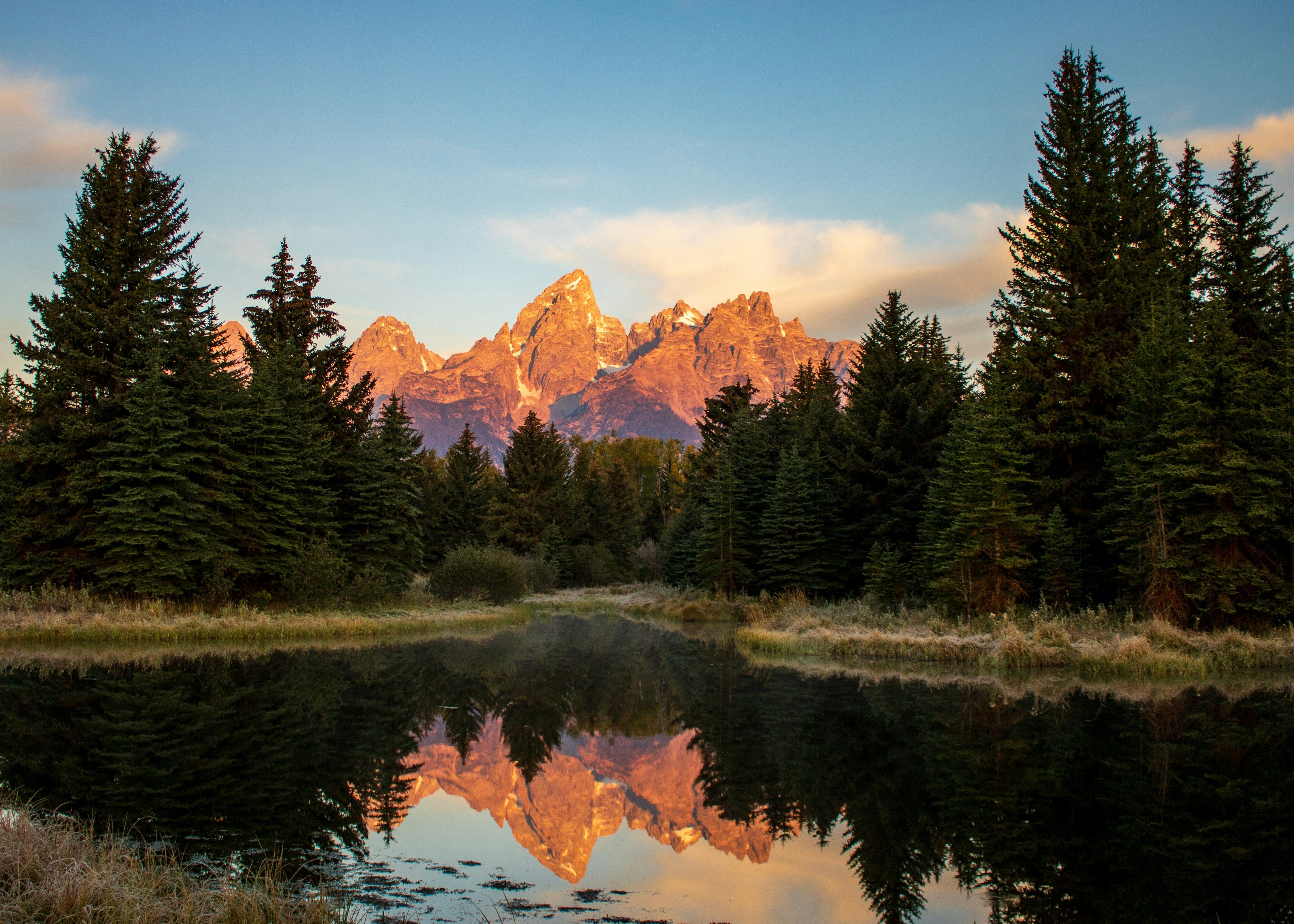
The Tetons rise straight out of the valley floor, about 7,000 feet in one sheer wall. There's nothing in the way, so the view from the road is as good as the view from most trails.
- Schwabacher Landing. Beaver ponds that hold a mirror image of the range at first light.
- Oxbow Bend. Slow water, moose in the willows, Mount Moran behind.
- Jenny Lake. Take the boat across and hike up to Hidden Falls and Inspiration Point.
- The west side. From Teton Valley you see the Grand from behind, framed by hay fields and buck-rail fences.
Yellowstone National Park
Where the ground breathes
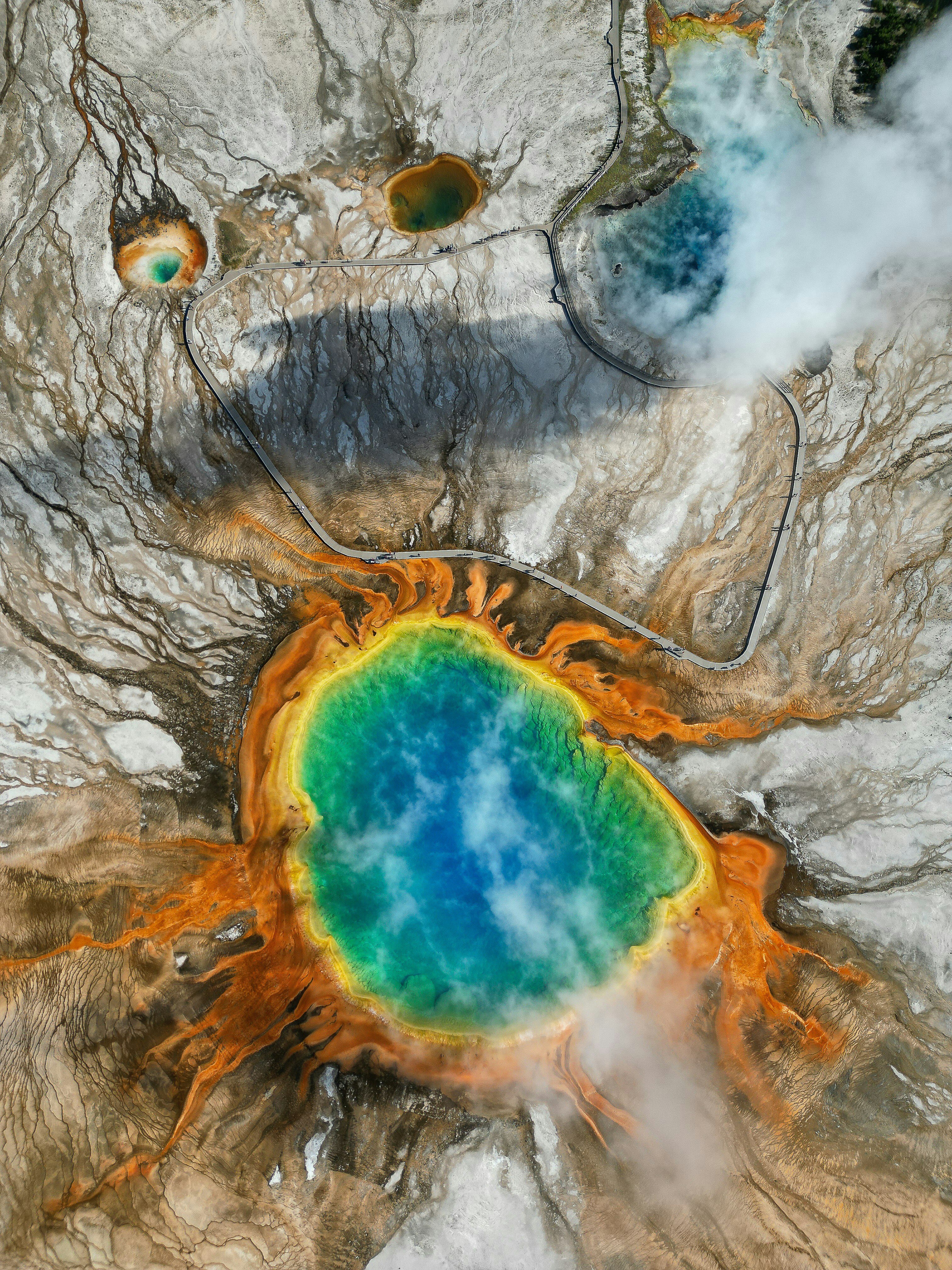
Yellowstone sits on top of a supervolcano, and you can feel it. Boardwalks cross basins of hissing vents, bubbling mud and pools so clear you can see 50 feet down.
- Grand Prismatic Spring. Over 300 feet across. Climb the Fairy Falls overlook trail to see the colour bands from above.
- Old Faithful. Erupts about every 90 minutes. The visitor centre posts the next predicted time.
- Grand Canyon of the Yellowstone. Yellow rhyolite walls and a 308-foot waterfall at Lower Falls.
- Lamar Valley. Wide, quiet and full of animals. Bring binoculars and a thermos.
Wildlife
Who you'll meet out there
The animals keep their own hours. Go out early or late, drive slowly and pull fully off the road when you stop.
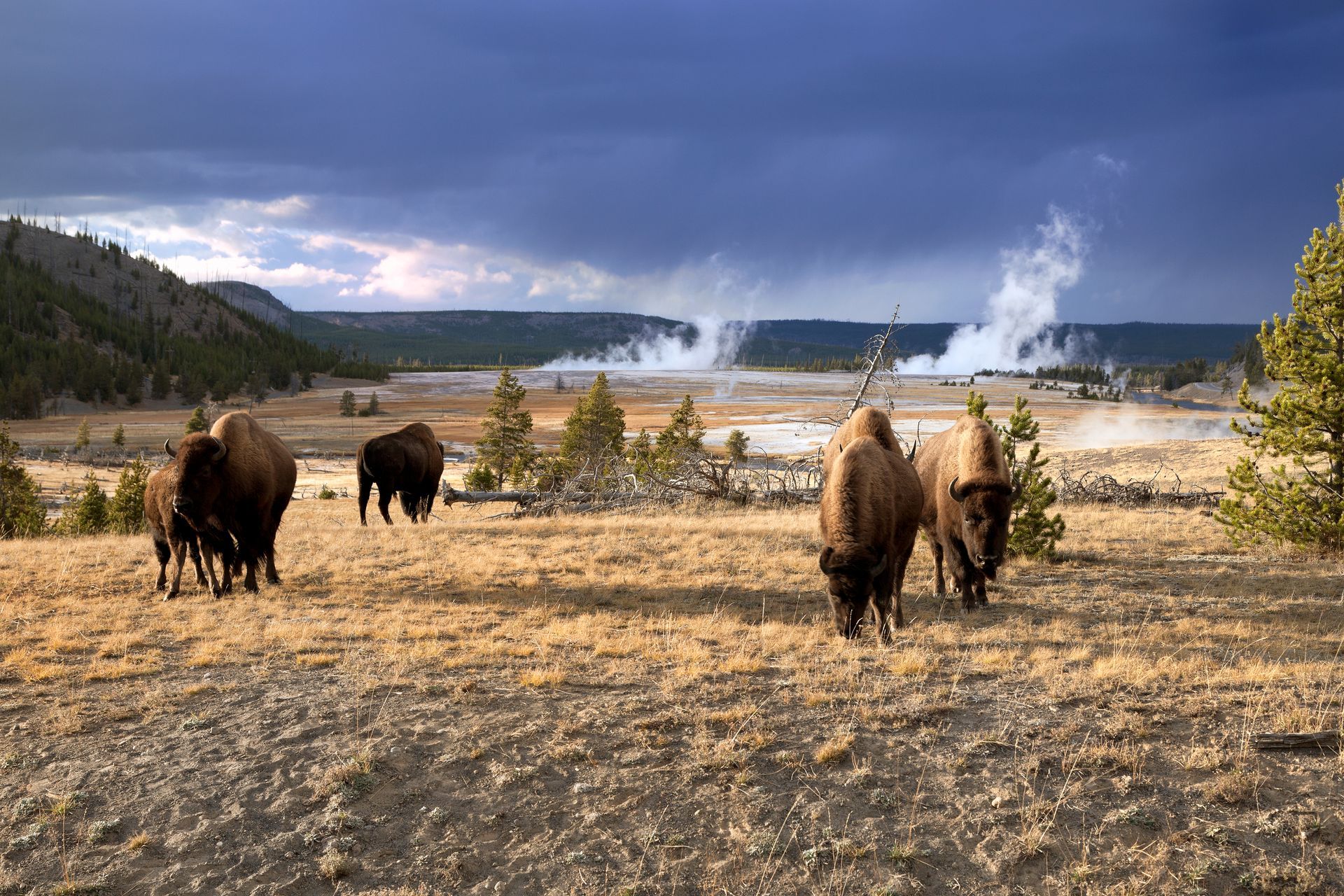
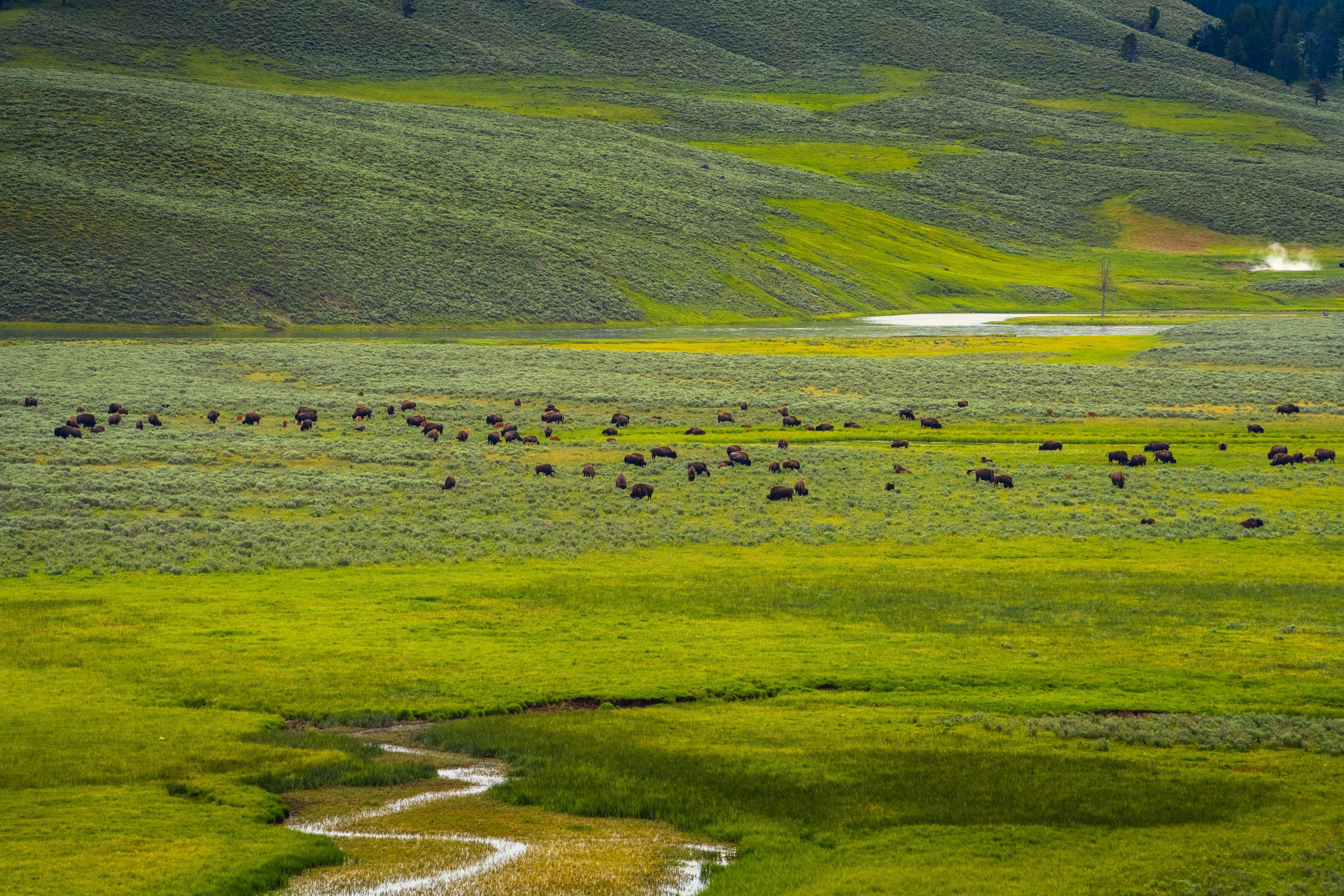
Bison
Yellowstone's herd has roamed here since prehistoric times. Bulls can top 2,000 pounds and still run 35 miles an hour.
Best seen: Lamar and Hayden valleys, year round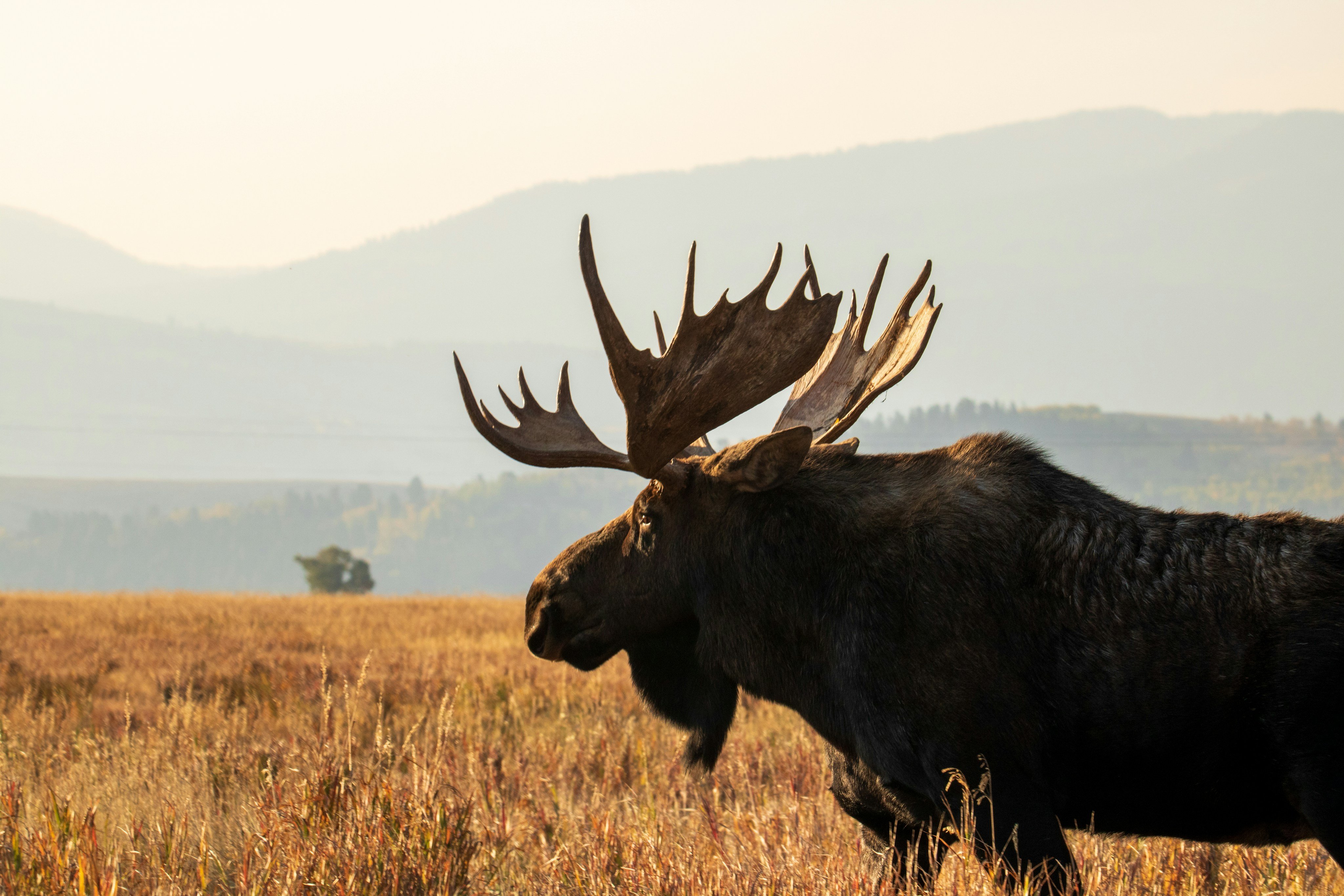
Moose
Look for them knee-deep in willow flats and slow rivers. Bulls carry their widest antlers in early autumn.
Best seen: Oxbow Bend, Moose-Wilson Road, Gros Ventre River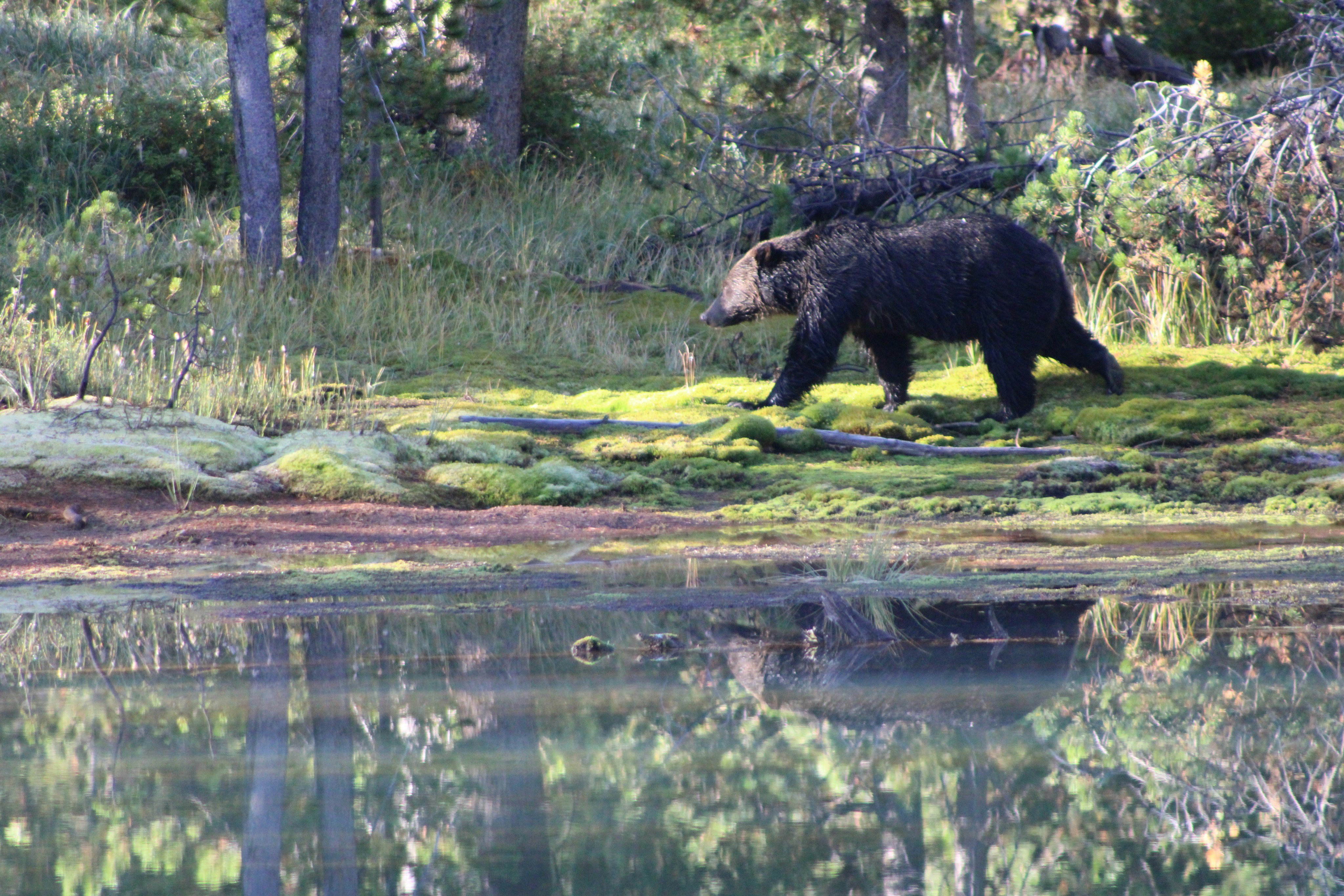
Grizzly bears
They come out of their dens hungry in spring and work the meadows and roadsides for weeks. Carry bear spray on every hike.
Best seen: Hayden Valley, Pilgrim Creek, May to June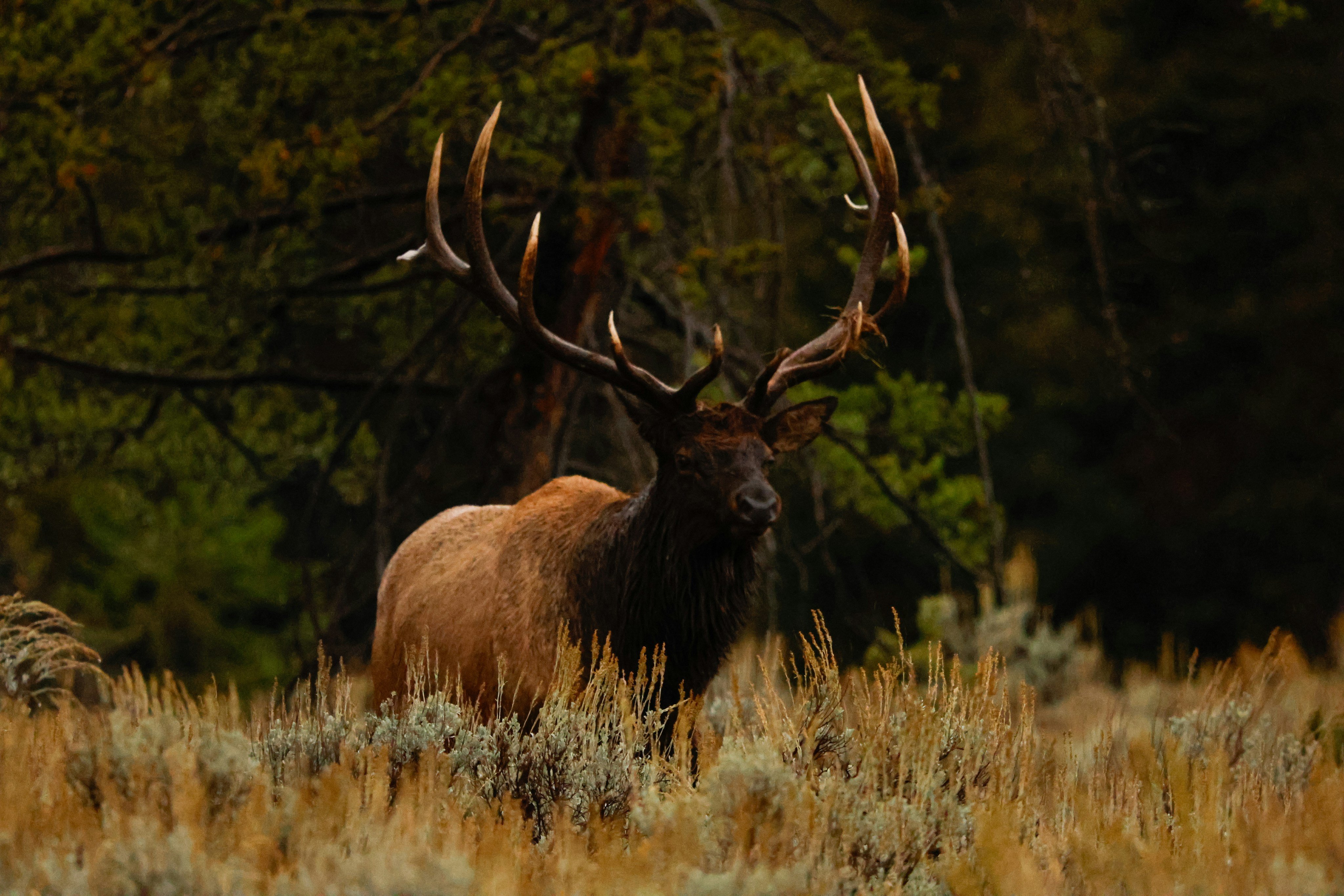
Elk
In September the bulls bugle at dusk, a high, eerie call that carries for miles across the meadows.
Best seen: Mammoth Hot Springs, Timbered Island, the autumn rutWhen to go
Every season shows you something different
Spring
Bears wake up, bison calves turn up in the herds and the waterfalls run full. Some roads stay closed into May.
Summer
Every road and trail is open, wildflowers cover the high meadows and the evenings stay light until ten.
Autumn
Aspens turn gold, the elk rut starts and the crowds thin out after Labor Day. Our favourite time of year.
Winter
Steam hangs over frozen geyser basins. Yellowstone's interior is reached by snowcoach or snowmobile, and the National Elk Refuge offers sleigh rides.
Give them room
Park rules ask you to stay at least 100 yards from bears and wolves and 25 yards from every other animal, bison and elk included. A long lens or a pair of binoculars gets you closer than your feet should. Never feed wildlife, and stay on the boardwalks in thermal areas: the crust can be thinner than it looks.
Base camp
Stay on the quiet side of the Tetons
Teton Valley puts you about an hour from Grand Teton and under two hours from Yellowstone's west entrance, with the Grand in view from your porch.